Addicted to Stimulation
By : Anais Lopez
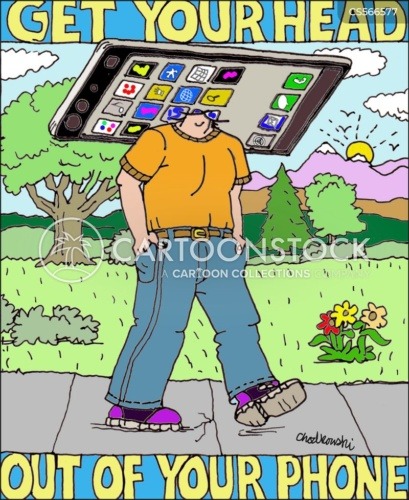
In the world that surrounds us we should be told to be on our phones constantly,yet this shouldn’t be the case. While being on our phones educates us and allows us to communicate with others,there is an enormous population that has become addicted to their cellular devices. We see this with ages going from 8 years old to 70’s and above. This reality shows how easily time passes us by while we are remaining sucked into our screens . As time slips away this is jeopardizing the way we view boredom. Boredom should be a moment where we can at least take advantage of. Yet, society has been seen in a constant circle being captivated by the media. Have you ever felt an extreme sense of tiredness after using your cellular device?
If so, this would be completely normal because as much as those think our technology is helping us, it is doing the exact opposite. Our phones are making us lazier and extra tired. The blue light that people refer to not only strains one’s eyes, but it also makes our brain work overtime. Trending on Tik Tok to spread awareness about “Boredom”, a trend was created just to sit in boredom for a time period. In many videos pertaining to said trend, you can analyze people sitting in front of their screen doing absolutely nothing. This would have been beneficial ,but doing nothing means not getting anything done. So, this concept wasn’t really helping anyone be productive at all.
In an article titled “Thinking is a Luxury Good” by Mary Harrington targets many points as to why boredom affects us. Living in America we constantly hear the phrase
“ American dream” ,but turns out many are at a disadvantage.Living in America or not, overconsumption of our phones can lead to jeopardizing a future of the “American dream”. Simply pertaining to anyone sacrificing for success. Harrington mentions that “the result is a media environment that seems like the cognitive equivalent of the junk food aisle and is every bit as difficult to resist as those colorful, unhealthy packages”. The knowledge we obtain from the media is the unhealthy packages. Imagine eating a whole pizza pie, drinking 2 liters of coke a day, and having half a chocolate cake.
Wouldn’t you feel exhausted and not be able to move? Well an addiction to our smartphones is just that. The longer we watch Youtube Shorts, Tik Tok, or even scroll on instagram reels it begins to have the same effect. Except the same way you watch videos is the same way you can binge-eat and increase calories. According to Health Benefits Time, “Studies show compulsive smartphone usage correlates with elevated BMI and poor dietary choices”. An increase in BMI also means a decrease within physical activity. Lacking physical movement and intaking horrible nutrients can lead to a major issue of obesity.
Like everything that connects , obesity connects within how you live your life. Both mentally and physically. Saying that , overconsumption of technology leads to laziness and laziness leads to nothing done. This can also mean not getting up and obtaining a job. A job shows a lot of discipline ,but if someone can’t get a job in the first place then how can they make a living?
According to an HR Leader on LINKED IN of the name John Engleheart Jr, he states “According to a recent survey by CareerBuilder, 58% of employers reported firing employees for excessive mobile phone usage at work”. A job can be boring and easy to get side-tracted from.Therefore, employers have switched to using their phone anytime they get the chance on the job. Clearly, creating a habit of not knowing how to balance work and private life.
Which is why at a young age it is smart to build healthy habits ,but according to our study conducted even the youngest of the age of 8 years old goes on their phone first thing in the morning. This says a lot on its own. To which, Harrington correlates how this unproductiveness can lead to declining literacy.Reading is an essential to success ,but also within our surroundings.Think of when you read an article published. Do you actually read word for word ,taking your time to acknowledge your words, or are you fast to skim and get the jist of the article. The simple answer is there is no note-taking and reading this text right now, you’re probably just skimming through it. This is because this has become the new norm.
If only people can read without skimming, our critical thinking would also be more effective. However, with the increase of technology our attention span has decreased a tremendous amount. Society must relearn how to sit with boredom instead of escaping it. Boredom is not a flaw in modern life because it is a necessary condition for creativity.Yet, stimulation from our smartphones removes the opportunity for the brain to slow down and process information deeply. Having a consistency to the exposure of notifications, short-form videos, and instant gratification trains the brain to seek rapid stimulation.
As a result, many individuals display behaviors that resemble attention disorders. This shows signs of difficulty focusing, impulsivity, and restlessness. While smartphones do not medically cause ADHD, they encourage patterns of broken attention that make concentration increasingly difficult. Which explains why tasks such as reading long texts, completing assignments, or engaging in deep thought feel super exhausting. When attention starts to be divided, the brain loses its ability to remain focused for extended periods. Further contributing to declining literacy and weakened critical thinking skills. A bunch of studies have been conducted to this topic and one specifically in California “ found that 4.6% of teens who didn’t report any high-frequency use of digital media had symptoms of ADHD at the end of the study — but that number jumped to 9.5% of those who reported seven high-frequency activities”. This was just in the span of an experiment ,much less on a daily basis.
In a study conducted within our form we had ages such as 14-15 as well. This age other than a 8 year -old happens to be crucial ,as well. Specifically because this is the age where a child is coming about. The majority of the young adolescents at this age are freshly into High School. This is a huge chapter because this is where social skills also come into play. Yet, if they are stuck into a world with just media, how can they fully develop certain social skills? Smartphones are not just affecting teens, but also younger ages. For example, I have a 1 year old sister and I often wonder how the media will affect her as she gets older. At just the age of 1 years old, my sister is captivated by a woman on Youtube of the name Ms, Rachel. If you live under a rock, Ms. Rachel is a known entertainer for the little ones. Not only is it super educational,but all the kids seemed to be stuck on the screen. My Sister and other little ones I observed will genuinely throw a tantrum in public if they don’t have a phone.
Despite these drawbacks, technology is not truly harmful. The widespread availability of smartphones and computers has increased access to information, education, and communication across socioeconomic boundaries. However, access alone does not guarantee understanding or growth. Without discipline and intentional use, technology can hinder rather than help personal development. Which is why when bored you should find ways to be more productive. That first thing while you wake up should not be immediately going on your cellular device. The challenge facing modern society is not eliminating technology, but learning how to coexist with it in a way that preserves attention, literacy, and critical thinking.
Bibliography:
Harrington, M. (2023). Thinking is a luxury good. UnHerd.
https://unherd.com/2023/01/thinking-is-a-luxury-good/
Health Benefits Time. (n.d.). Negative effects of smartphone addiction.
https://www.healthbenefitstimes.com/health-benefits-of-smartphone-addiction/
Engleheart, J., Jr. (2022). Excessive phone use at work and employee termination. LinkedIn.
https://www.linkedin.com/
Radesky, J. S., Schumacher, J., & Zuckerman, B. (2015). Mobile and interactive media use by young children: The good, the bad, and the unknown. Pediatrics, 135(1), 1–3.
https://doi.org/10.1542/peds.2014-2251
Ra, C. K., Cho, J., Stone, M. D., De La Cerda, J., Goldenson, N. I., Moroney, E., Tung, I., Lee, S. S., & Leventhal, A. M. (2018). Association of digital media use with subsequent symptoms of attention-deficit/hyperactivity disorder among adolescents. JAMA, 320(3), 255–263.
https://doi.org/10.1001/jama.2018.8931
Rachel Griffin Accurso. (n.d.). Ms. Rachel. YouTube.
https://www.youtube.com/@msrachel

